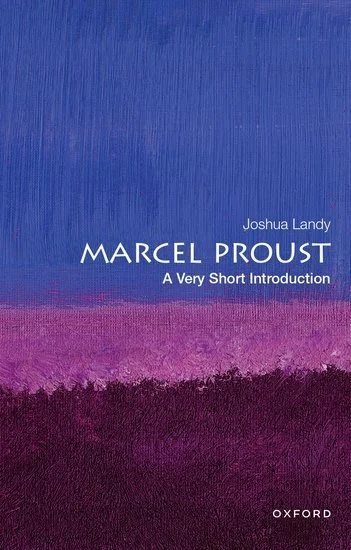
Marcel Proust: A Very Short Introduction (Oxford, 2024). Audiobook (narrated by Kevin Kemp), Tantor Media, 2025. Previously in hardcover as The World According to Proust (Oxford, 2023).
How to Do Things with Fictions (Oxford, 2012).
Philosophy as Fiction: Self, Deception, and Knowledge in Proust (Oxford, 2004).
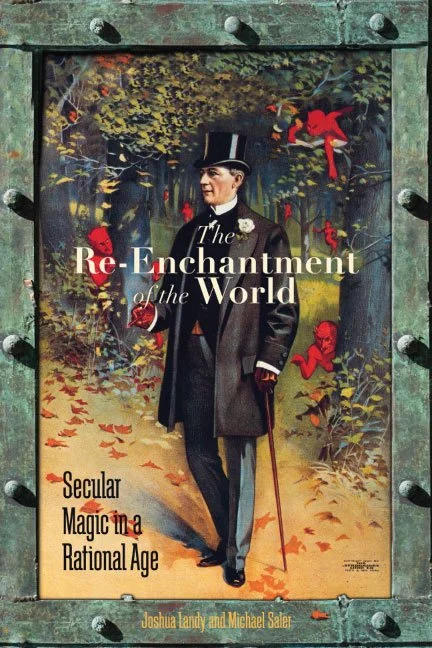
Edited collection: The Re-Enchantment of the World: Secular Magic in a Rational Age, with Michael Saler (Stanford, 2009).
Reviews of Marcel Proust: A Very Short Introduction
“Writing about a novelist’s philosophical ideas is not easy. There are two main dangers: losing sight of the philosophy and losing sight of the novel. What I take to be the best instances of philosophical writings about novels manage to say both something that enrich our enjoyment or understanding of the novel and something that has independent philosophical import. … But how easy is it to pull it off when it comes to In Search of Lost Time? If these three volumes are anything to judge by, it seems to be fiendishly difficult. One major exception is Joshua Landy’s work, both in his 2004 grand and scholarly book on Proust (Joshua Landy, Philosophy as Fiction: Self, Deception and Knowledge in Proust. (Oxford: Oxford University Press, 2004)) and in this much shorter one. … Landy’s book is a masterclass both in how one can talk about very complex topics in very down-to-earth terms and in how one can talk about Proust’s ideas in a way that is relatable to those who are not familiar with the jargon of literary studies (or of philosophy).” (Bence Nanay, The Journal of Aesthetics and Art Criticism)
“Landy explores the ideas within Proust’s novel with a sense of fun, likening Proustian involuntary memory to a time machine that can take one back, for instance, to humiliating oneself at a New Year’s Eve party decades ago. … Accessible and amusing, this is a must-read for anyone who has considered reading Proust but was too afraid to try.” (Publishers’ Weekly)
”Landy’s book will appeal to a broad audience – new readers and confirmed devotees alike. It is both entertaining and erudite (the ‘references’ provide many useful pointers to previous Proust criticism). It will help readers to see the labels often attached to Proust (‘difficult’, ‘daunting’, etc.) for the stereotypes they are; and it will encourage them to explore for themselves the inexhaustible riches of Proust’s work.” (Brian Nelson, Australian Book Review)
Reviews of How to Do Things with Fictions
”Joshua Landy’s captivating book, How to Do Things with Fictions, dispenses with the usual pieties about what we stand to gain from literary works. In their place, he advances a compelling theory that reveals as much about what fiction can do for us as it does about what we can do with fiction. … In each of his case studies, Landy succeeds in unsettling existing ways in which scholars understand specific literary works. … By demonstrating how formative fictions make new habits of mind available to their readers, he opens up vast, untraveled critical terrain. … Landy thus presents readers with an ethical choice: whether to undertake the great labor of developing mental capacities that are essential for flourishing. In true formative fashion, his dazzling book makes it hard to do anything less.” (Elaine Auyoung, Modern Language Notes)
”It is rare to read a work in which the sense comes through so fully of what it must be like to sit in the author's classroom; in this case, it is clear that Stanford students enjoy an intellectual treat, one now available to many others. Summing Up: Essential.” (D. L. Patey, Choice)
Reviews of Philosophy as Fiction
“Landy’s book delivers what has gone long and scandalously missing: a philosophical analysis of Proust’s incomparable book that is muscular, concise, philosophically informed and sophisticated; logically rigorous, explanatorily fruitful, and meticulously answerable to its data, namely the text. The philosophy here is not, as often the case in writing about Proust, mere rhetoric or window-dressing, but substantive and literally believable. The book should for a long time be inescapable for anyone writing philosophically about Proust, and perhaps for anyone writing philosophically about imaginative literature, full stop. It is that good, it’s themes that wide.” (Gary Kemp, Philosophy and Literature)
“An extraordinary book that allows literary and philosophical concerns to interact in a mutually enriching way, providing a promising new orientation for Proust studies—and for literary studies in general.” (Trina Marmarelli, Poetics Today)
“Necessary reading for all those who have forgotten why Proust really merits our attention, as the consummate modern philosopher of the literary life. … This exemplary study of selfhood and perspectival truth in Proust concerns itself exclusively with distinctions that matter.” (Derek Schilling, French Forum)
"And this is constantly the reward for the reader of Landy: however familiar he/she is with Proust and the Proustian critical canon, Landy is able to re-illuminate Proustian thinking by carefully tracing its modulations and re-constructing its complexity.... This is a reading of Proust which is as 'voluptous'—its footnotes occupy almost a third of the book—as it is accurate, penetrating, and richly satisfying." (Clive Scott, Journal of European Studies)
"A useful, indeed a brilliant, introduction.... Joshua Landy successfully argues that reading Proust is a 'spiritual exercise'.... In the Coda, he supplies a sort of chocolate box of Proustian sentences, and the joy he takes in 'the exasperatingly engaging Proustian style' is contagious." (Tom D'Evelyn, Providence Journal)
“Joshua Landy... takes just the ambitious holistic approach that a reader needs. The point of departure is daring: previously it has not been known how to appreciate the philosophical implications of the novel in the right way.” (Johan Sahlin, Svenska Dagbladet)
“In clearing biography out of the equation, Landy creates space for a probing philosophical reading of Proust’s novel. … Landy's persuasive thesis is that the Recherche converges unwittingly with the philosophy of Nietzsche, whose prescription, 'In order to act we require the veil of illusion: such is Hamlet's doctrine', Landy cross-refers to Proust with telling results.” (Times Literary Supplement)
Reviews of The Re-Enchantment of the World
”The imaginative reach of these authors is itself a source of wonder.” (M. S. Vogeler, Choice)
“The writers offer provocative and often brilliant meditations on the possibilities of secular modernity.” (Joanna Picciotto, Common Knowledge)
”This collection makes clear that any understanding of modern re-enchantment is incomplete without a consideration of its many and varied permutations." (Katherine Elkins, Modernism/Modernity)
”The collection is rich, varied, and overall an excellent and helpful text that I would say ‘prepares the soil’ for many fruitful discussions on reason, philosophy, art, ecology, poetry, music and magic. Anyone interested in these subjects as they pertain to the ideas of enchantment and disenchantment will value this book.” (Peter Duchemin, Analecta Hermeneutica)